‘If you want your child to be intelligent, read them
fairy tales. If you want them to be more intelligent, read them more fairy
tales.’ ~ Albert Eisntein
‘If you want your child to be more intelligent,
along with being creative and imaginative, buy iStoryTree.’ ~ TechTree IT Systems Pvt. Ltd.
***
Ideas gain importance and become great only when
they are manifested into the real world. Without the process of implementation,
they would remain mere fluff.
Some great ideas, however, do get implemented at any
cost. And iStoryTree is a live
example.
With loads of surprises and fun activities that
teach and entertain your child at the same time, iStoryTree is filled with artistic illustrations of the highest
quality. Introducing for the first time a perfect educational and activity
picture book app that develops your child’s Motor Skills, Cognitive Skills and language skills in a very simple
way!
Designed to keep your little angel’s curiosity
ignited, starting with the story Crab and Crane, iStoryTree makes sure your child laughs,
while he/she learns.
***
Salient features of iStoryTree:
1.
Delightful
animations and marvelous sound effects:
The picturesque background,
against which the story is set, has a language of its own: Authenticity.
 Mind-blowing animations will
immerse your child into the stories. With their unique physicality and sounds,
characters look believable. Every twitch on the character’s face is visible;
and every non-living thing veritable.
Mind-blowing animations will
immerse your child into the stories. With their unique physicality and sounds,
characters look believable. Every twitch on the character’s face is visible;
and every non-living thing veritable.
Every character’s sound is
unique; and artists at TechTree IT have made it possible for you to notice that
uniqueness. The chirping of birds, the plop that comes when fish dive into the
water…
The visuals, when accompanied by
proper sound and music, create more impact than any known medium. We, at
TechTree IT, understand this well. And iStoryTree
is the proof.
2.
Eloquent
Narration:
In any story, narration plays an
important role. How well someone tells a story makes all the difference. iStoryTree’s ‘Read to Me’ feature does
just that: it tells the story in the most exquisite way possible. A pleasing
voice, coupled with delightful animations, immerses your child in the story
like never before. Each word is carefully enunciated, as the word is
highlighted, so that your child can focus and understand easily.

You want to attend the door and stop the
narration for a while? Well, you have an option to stop the narrative midway,
and continue later on, at your convenience. Or play the page again from the
beginning. And once a page is complete, just ask your child to tap on the
characters, the background and the objects, and enjoy the expressions on your
darling’s face: everything that is tapped will come to life with funny sounds
and animations. The chirpy birds take flight, the fish fly and dive back in,
the frog jumps, the clouds float, the grass sways, and the main characters of
the story even tell their names.
Needless to say, your child learns to
pronounce words properly. Reading skills are automatically improved. And as you
must already know, the first thing to know about reading is how to read with
commas and periods. Finally, it goes without saying that with marvelous visuals
and sound effects, and a pleasing voice, your child’s listening skills are
improved beyond means.
3.
Read
by yourself:
Want to read by yourself? iStoryTree’s ‘I wanna Read’ feature lets
you read by yourself, spelling out each word at a slow and a steady pace.
Tap on a word to know how to pronounce
it properly; also learn to spell it. And if you want to know the meaning of a
difficult word, just press and hold the word for one second and see the meaning
popping out, with the word’s part-of-speech. Along with the meaning, the
inbuilt dictionary also gives an example on how to use the word effectively in
a sentence.
Want to go away for a few minutes, maybe
to prepare hot chocolate for your child? Just hand over your iPad to your
little angel before you go. It might amaze you to know that your child develops
motor skills along with
pronunciation skills when he starts using his fingers to tap the screen.
***
Before we go any further, let’s
understand what motor skills are:
Motor skills are functions, which
involve precise movements of muscles with the intent to perform a specific act.
Or, they are motions carried out when the brain, nervous system and muscles
work together.
There are two kinds of motor skills: Fine motor skills and Gross motor skills.
Fine motor skills are small movements
such as grabbing something with your thumb and forefinger.
Gross motor skills are bigger movements
like jumping and running.
It is extremely important for a child to
have these skills to perform well in academics, or in any other field. And iStoryTree helps a child acquire these
skills easily.
***
4.
It’s
play time:
Now that storytelling is over, what
next, you must be wondering. Well, it’s time for some fun. iStoryTree comes up with a unique feature that allows children to
play as they learn.
Catch
Them All
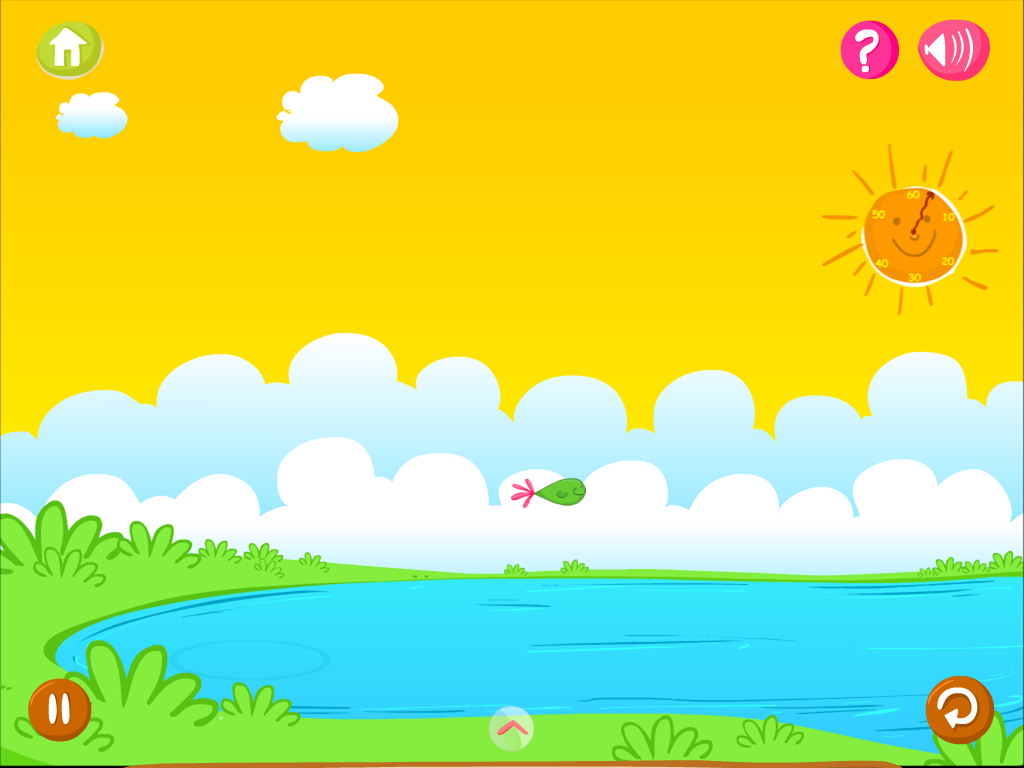
teaches children how to count. Fish fly out of water, only to dive back in. You
have to catch (tap) the fish when they are above water. Every time you tap a
fish, your score is appended at the top. You have a minute to play the game.
This game not only teaches children how
to count, but mainly it develops concentration. Their muscle memory increases
when they use their little fingers to tap the fish with precision. In short,
their fine motor skills develop.
Fill
Me Up
is a spelling test. When a word with a missing letter of the English alphabet
appears on the screen, you have to guess the missing letter. Words keep coming
up for a minute.
As children enjoy this game, they not
only learn to spell the words, but also their cognitive skills develop.
5.
Bring
out the artist in your child:
Story time is over, games are over. So
now what? How about some painting that brings out the artist in your child?!
Sounds fun? It is.
iStoryTree’s Gallery has a
unique feature: Finger-painting.
The gallery allows you to choose one of
the eleven artworks. Upon choosing an artwork, select colors from the color
palette, and various brushes provided at the right, and start painting! Not
satisfied with your art? No problem. Perfection takes time. For the time being,
choose an eraser and do away with the unsatisfactory part of your painting.
Want to delete the whole thing? You can do that, too. And once you are done
with your painting, you can save it on your iPad and share it on Facebook.
With this amazing feature you can also
make greeting cards and send it to your friends and family. Once the painting
is done, choose a predefined word from the given list (Happy B’day, Get Well
Soon, All the Best, Happy Anniversary, etc), and paste it on your canvas. You
can also stick stamps on your card (characters from the story).
That is not all. You can also select
pictures from your iPad gallery, or click your own pictures using the camera,
and paste them in the frame you have selected. Improve upon it, or distort it
for fun.
It goes without saying that your child’s
fine motor skills will be developed
beyond means.
6.
Colors
and Magic:
One
more activity that develops your child’s motor
skills!
 If
activities like Catch Them All
develop fine motor skills in children, Magic
Colors develop gross motor skills.
Children tend to become couch potatoes once in a while. It is then time to hand
over your iPad to them, so that they can start dancing and coloring at the same
time in a rhythmic fashion.
If
activities like Catch Them All
develop fine motor skills in children, Magic
Colors develop gross motor skills.
Children tend to become couch potatoes once in a while. It is then time to hand
over your iPad to them, so that they can start dancing and coloring at the same
time in a rhythmic fashion.
Choose
your favorite outlined artwork from the story, hold the iPad in your hands and
start moving and shaking. The magic colors magically start filling up the
outlined artwork. And voila! Your child has become active again.
Once your artwork is complete, you can
share the magic with your friends and relatives on Facebook.
7.
Narrate
the story in your voice:
Is your child fed up of listening to
prerecorded voice? Or are you traveling somewhere and want your child to feel
your presence? Well, you are just a tap away.
iStoryTree comes with this
beautiful feature where you can record the story in your voice and see the
surprise in your child’s eyes. Scroll through the pages from the story, read
the story in your voice, record it, and save it. The next time you want to show
off your narrative skills, or if you want your child to listen to the story
narrated by you, just select the saved file and play it.
There is also a sample voice of the
voice artist for your reference.
If your child is old enough to read the
story, ask him to record it in his voice. Further when you listen to the
narrative, you can spot your child’s mistakes in pronunciation and improve upon
it.
This exercise will develop your child’s
reading skills in the best way possible: for there is a huge difference between
telling your child of his mistakes, and making him realize his mistakes on his
own.
8.
Dictionary:
Use the
dictionary to learn the meanings of all the important words from the story.
Along with the meaning, it also gives a sample sentence, teaching your child
how to use the word effectively.
9.
Avatar
Jennie:
Calling Jennie the star of iStoryTree wouldn’t be an overstatement:
for 8-year-old Jennie tells the whole story with her unique expressions and
hand-gestures, your child will learn elocution skills in a very easy way.
 Language skills are acquired without any
hassles: sequencing of sentences and words, comprehension, pronunciation,
narrative skills, and ability to recall – everything automatically improves as
your child listens to funny Jennie.
Language skills are acquired without any
hassles: sequencing of sentences and words, comprehension, pronunciation,
narrative skills, and ability to recall – everything automatically improves as
your child listens to funny Jennie.
***
Spanish
philosopher and novelist George Santayana wasn’t wrong when he said, ‘A child
educated only at school is an uneducated child.’
To
fare well in this competitive world – learning values, developing language and developing
the right attitude are as important as academic learning. iStoryTree does exactly that: it helps your child develop those
life skills in a beautiful way. At the same time, it ensures your child giggles
and laughs. After all, we believe in heaven; and heaven happens when a child
giggles!
*********
Click
here to visit iTunes Store.